Tuesday, September 21, 2010

Thoughts on Homewood's LODD

The Chicago Sun Times, Chicago Tribune, and other Chicago Area parers are discussing the NIOSH report of the March 30th, 2010 fire that killed Firefighter Brian Carey and injured Firefighter Karra Kopas.
The Sun Times article.  The Chicago Tribune Article.

The Sun Times article takes a pretty harsh tone.  The Tribune Article is a little more measured in their reporting.  While NIOSH has not posted the report on their website as of this morning, the Sun Times has a copy of the report (without yet to be completed appendices).

I spent a good forty minutes reading the report and the articles from the two news outlets.  NIOSH provides a valuable service to the fire service by conducting investigations into Firefighter LODD and sharing lessons learned.  The objective is a noble one: to reduce firefighter fatalities and injuries.  The problem comes in when people start trying to read the recommendations as though they were gospel.

In the Sun Times article, John Ryan states, "Poor tactical decisions were made on how to try to extinguish the fire, including sending Carey and fellow firefighters Karra Kopas and Chris Kieta into the building with a hose that was too big to maneuver within the house."  Ryan goes on to state that, "...crew members outside the home didn't recognize signs of the deteriorating situation and order firefighters out of the building."  These conclusions are based on the "Key Recommendations" identified by NIOSH.  I do have to wonder if Mr. Ryan has ever had to make critical life and death decisions in the environment.

Situational Awareness and Fireground Tactical Decision Making  are two subjects that I take very seriously.  I've written extensivly on both issues, and teach the subjects to anyone who will host a class.   Might some elements of Situational Awareness have been lacking in the Homewood Fire?  Perhaps. 
 However, crews did perceive the advanced level of fire growth, which prompted them to pull a 2-1/2" line.  They comprehended that they had a victim in the fire building, a man whose wife had called 911 to report the fire on the front lawn saying her husband was inside.  They likely predicted that conditions were bad, and were going to get worse.  I feel comfortable saying that they likely made a Decision to try and overcome the BTU output using big water and make an aggressive Primary Search to try and determine if they could get the victim out.

Now, we come against the big "factor" in my opinion.  Should they have attempted an aggressive interior operation with a focus on the possibility of a rescue?  That's really the heart of the matter here.  All the other factors are secondary to this question: "Will we go in there?"

You of course have to make that decision any given time you pull up in front of a working fire.  We must understand the dangers present and have a fine tuned knowledge of fire behavior, building construction, and reading smoke if we are going to have the best chance of going home safe.  We need to be prepared to retreat if conditions suddenly deteriorate.  Most importantly, I believe we need to define before we ever get on the rig what level of risk we are willing to accept.  Are we willing to crawl into the building that is on fire at risk to ourselves?  Fire Chief's need to define what level of risk their department is willing to assume to accomplish the mission.   Make these things clear to your Firefighters, to your Officers, and to the citizens you serve.

Is this building, and the possible/probable life inside WORTH the risk to your self?  In the NIOSH report they highlight the concept of Victim Survivability Profiling.  It is a controversial topic, because it requires firefighters to make a decision about if a building may have likely living victims inside it.  I say it is controversial because of the conversations it has sparked in the circles of Firefighters and Officers I talk with.  I know I'm going to sit down and really gather my thoughts about Victim Survivability Profiling at some point.  In the case of the Homewood and Hazel Crest crews that pulled up that day in March they made the decision that the potential of rescuing the occupant warranted an aggressive interior operation.

Now, one of the items that Mr. Ryan latched onto as a criticism of the team, and one that NIOSH is able to address in a very sterile manner is the fact that the senior firefighter on the attack line left the building.  NIOSH identified that the firefighter had a problem with his PPE, his hood was not fully covering part of his face and he had to exit the building to fix the problem.  Where NIOSH goes with this is to effectively say that crew integrity was compromised and that this was one of the important factors that lead to the Engine crew no leaving the building before it flashed over.  Now, I was not there, but I can imagine the thought process. 

The senior firefighter, who was identified  in the Sun Times article, had a PPE problem. It happens.  He had a decision to make: 1)have the crew conducting the primary search abort and the Engine Company exit the building or 2)turn the line over to the other two firefighters on the Engine Company, make a quick exit to fix the problem, and then return to the nozzle team.  He chose to not have the entire operation stop.  He chose to do what he thought would be best for the overall fireground operation.  He exited to fix his PPE and reenter the building once he had.  I think it's a choice many people would have made.  He wasn't exiting a 30,000 square foot grocery store leaving a crew behind, he was moving twelve feet outside to fix his hood and then get back with his crew.  I think it's a choice many people reading this would have made.

I read the NIOSH report, I read the recommendations, I looked at the diagrams.  I've reached my own conclusion about why the building flashed. 


Layout of the Fire Building
If you look at the first picture of the fire building (image copyright NIOSH 2010) you will see that the Engine Crew advanced to door from the kitchen to the utility room.  This was where FF Carey was found after the hose had burnt through.

Now look at the second picture (image copyright NIOSH 2010).  The seat of the fire was in the addition on the "C" side of the building.


Conditions immediately prior to Flashover

The reason that the Flashover occured was that the Engine Crew stopped before they "Made the turn".

Making the turn is what every nozzle team has to do to put the fire out.  You have to get the water on the seat of the fire to stop the BTU production.  That requires you to push down a very hot, very dangerous hallway many times.  It inflicts punishment on the nozzle team.  Without making the turn you are simply putting water on the flame front, but you are not cooling the fire.  You can cool the ceiling as much as you want, if you don't get to the seat of the fire, it will Flashover.

In order to keep this fire from flashing over the nozzle would have to advance through the utility room and make the turn into the addition.  You have to do this with incomplete and imperfect information.  You have to do it through a difficult, dangerous environment. 

I see the NIOSH report, and more importantly Mr. Ryan's article in the Sun Times, as an attempt to make scape-goats of the Incident Commander and the Senior Firefighter.  Shame on them.  Yes, problems happened.  Anyone who has ever crawled into a burning building knows that there is no "perfect" fire.  We have to make decisions rapidly, in a life threatening environment, without perfect knowledge.  In some cases we are going to do our best and members will still get hurt, and sometimes one of our own will fall. We must learn from these incidents, not simply assign blame. 

Read the report for yourself.  Read every Line Of Duty Death report you can get your hands on.  Recognize  that you owe it to yourself, your family,and the members of your department to be prepared for the challenges of the fireground.  Be Safe.


Friday, September 3, 2010

Sincerity vs. Competency


Why do you choose to wear a firefighter's badge? Have you chosen this vocation to serve your neighbors, or because you want to be perceived as someone "special" or "important"? Do you choose to risk your life out of a sense of service, or have you chosen this "job" because of the opportunity to make a good living and have the security of a career service job?

If we look to the history of firefighting many of our brothers and sisters have chosen to don a helmet and pull up their boots out of a passion to serve their community and protect their neighbors from the effects of unrestrained fire. However as far back of the vigilies of Rome we know that men became Centurions or Prefects (the leadership positions in the Roman military units) in the cohorts vigilum because of the opportunity it presented to advance into higher service in imperial bureaucracy or the Praetorian Guard (the Emperor's personal guard and police force). I am of the opinion that people come to the Fire Service for three primary reasons: belief in the mission of "Saving lives and protecting property", financial rewards, or as a demonstration of value. The fact of the matter is that none of us usually choices a vocation for a single reason, but rather for a combination of reasons. What is your primary reason for wanting to be a firefighter though?

Belief in our mission is undoubtedly the primary motivator for most men and women who chose to take up the vocation of firefighting be they career, paid-on-call, part-time, or volunteer. While it may seem that financial rewards, such as are enjoyed by those of us in career and paid part-time departments would be the second likely motivator I don't think that is the case. Out of one and a half million firefighters in the United States the membership in the International Association of Firefighters is roughly 300,000. As a quick assessment that means that roughly 1.2 million men and women join the fire service for something other than financial security. That has to mean that the second most common reason people join the fire service is for the demonstration of value.

When I speak of "demonstration of value" I am talking about the guy or gal who has joined the fire service to carry a badge, be viewed as "special" by their friends or neighbors, or because they want to be a "hero". I am hesitant to use the word Hero to apply to anyone who has joined the fire service to try and impress people, which is why I put it in quotes and won't capitalize it. Now, I am not going to even begin to estimate just how many people join the fire service as a means of gaining the respect and admiration of their friends and neighbors, but I can say with certainty that it is far too many.

What this all comes down to is the need to understand that sincerity is no replacement for competency.

Friday, August 13, 2010

Our Rituals

Thousands of Firefighters from the Chicago Area and around the country participated in one of our timeless rituals, the laying to rest of a fallen Brother. FF/PM Christopher Wheatley, Chicago Fire Department, Truck Co. 2 fell from a ladder while fighting a fire August 9th. When I arrived at the funeral home yesterday to pay my respects I was humbled but not surprised that it took two hours to make way from the back of the line to his casket, salute him, and pay my respects to his family.

I didn't know Chris, but as is so common in our trade we have mutual friends and acquaintances. From everything that I have heard he was an amazing guy who loved being a firefighter. One thing that struck me in looking at the hundreds of photos his family had put together is that he had a genuine love for life. I did not see a single photo where he did not have a huge smile on his face.

FF/PM Wheatley's Funeral had an amazing turnout of Brother and Sister Firefighters.

Photo Copyright Tim Olk, 2010

Paying our respects to one of our fallen is a ritual that we do well. Many members volunteer countless hours to be members of Honor Guard Organizations or Pipe and Drum Bands. They train and prepare to render tribute to our honored dead. It is a noble service they provide.

While the Line of Duty Death Wake and Funeral are not the only Fire Service Rituals they are certainly the most well know. The purpose of the ritual is to give our Brothers and Sisters a chance to grieve, reflect, and honor. The ritual itself is a thing of beauty, as all things are.

Rituals are important for the human psyche, which is why we have created them for longer than history exists. Ritual provides a backdrop for our brains to set-aside the day to day thoughts, concerns, and distractions so that we can concentrate on important matters in a reverent way.

We can be speaking of a Church Service, a Symphony, or the way a chef goes about preparing a meal. A teacher and scholar I had the joy of learning from, Issac Bonewits (who also passed away this week), has said that ritual is a ordered sequence of events designed to bring about an altered state of consciousness.

Do you have rituals that you follow everyday you are at the firehouse, or when you are getting on the rig for a call, or do you have routines? There are people who use these words interchangeably. They are not synonymous however, for one is about approaching a task with reverence and the other about checking a box on a form. A ritual is “an established or prescribed procedure for a religious or other rite.” A routine is “regular, unvarying, habitual, unimaginative, or rote procedure." There is a very different state of mind involved when you approach a task as ritual, than when you approach it as routine. Are you like the professional pitcher who always puts his left sock on first? Do you always perform your rig check in the same order? Do you report the same pieces of information for every size-up? The human mind likes order, we like sequences and patterns. This is why the pattern matching that is a critical component of Recognition Primed Decision Making works so well. It’s also why many people are challenged by a rapidly changing situation that does not match up to their expected outcomes. Most of people do things the same way every time out of routine. For the Fire Service Warrior routine, mundane acts, take on the form of Ritual, and in doing so become part of being in the Ready Position.

Firefighting should be an altered state of consciousness. Preparing for your shift should be done with the same attention to detail a minister gives in preparing to preach. The alert of the station alarm, or the pager on your belt, should mentally trigger your understanding that something outside of your normal existence is about to occur; like the swelling of an orchestra during Beethoven’s 9th Symphony. If you ever find yourself having to call a MAYDAY it should be with the same sense of calm heard in the voice of “Sully” as he guided his aircraft into the Hudson.

In religious rituals the sound of the organ music, the lighting of candles, and the invocations of the celebrant are sub-conscious triggers that tell your brain that something “special” is going on. Those triggers are imbued with sacred meanings that are supposed to cause your mind to focus and set aside the “unimportant” thoughts. That initial dispatch should be the same thing. That should be the trigger that shuts off your thoughts about the fight you had with your spouse, how your kid is doing in school, and even of your parent who is dying in a hospital bed. You can come back to those thoughts later. They are important, but they are completely irrelevant right now. To be a Fire Service Warrior, you must approach each day with a focus. Whether we are cleaning tools, presenting a public education class, treating an asthma attack, or fighting a structure fire we owe it to ourselves and to our neighbors, our “customers” if you prefer, to be 100% present in the moment. Why? We have a sacred duty to protect society. The initial dispatch should trigger your mind to focus on the task at hand. Learning to do this can be challenging though. We all get consumed in our thoughts. Learning to flip a switch to shut out those other concerns will come only with practice.

Embrace your rituals and use them to guide you. As we say farewell to FF/PM Chris Wheatley another ritual is going on in Detroit. Family members, and Brothers and Sisters are at the bedsides of six brothers who were injured in a building collapse earlier today. One of their number is in very critical condition. Keep him in your thoughts and prayers. Be Safe.

Thursday, August 12, 2010

Firefighter Occupational Cancer

On July 31st, my friend and Brother Tony Volpe passed away from Colon Cancer.  While "the jury is still out" so to speak, I believe that Tony's cancer was as a result of Occupational Exposure.  Firefighters have been regularly idetified as having higher than the normal occurances of cancer. 

"Researchers found firefighters have a 100-percent higher risk of developing testicular cancer, a 50- percent higher risk for multiple myeloma and non-Hodgkin's lymphoma, and for prostate cancer it's a 28-percent increased risk, compared with nonfirefighters."

This is something we have to take seriously.  For those Hazardous Materials trained responders out there you will note that Gasoline does not have a reported value for an Immediately Dangerous to Life and Health Exposure (IDLH).  In the NIOSH pocket guide all that is listed under IDLH for Gasoline is the letters CA, because it has been identified as a carcinogen. 

The bulk of furnishings in the modern home are made with synthetic materials, materials most often derived from petroleum and its by-products.  Your table, couch, TV, phone, pillows, blankets are all essentially Gasoline in a solid state.  That is why modern fires burn roughly twice as hot as the fires that our Father's generation had to fight.  We do not yet fully understand what the health impact of crawling into a superheated atmosphere filled with these carcinogens may be. 

One thing must must do is ensure that our people are wearing their SCBA not just during suppression, but throughout overhaul as well.  The unburned products of combustion that we are breathing in are KILLING US.  Some additional measures you can take are to ensure that your turn-out gear is being washed to the manufactures recommendation and more importantly take a shower and change into clean clothes after every fire. 
If you were exposed at a HazMat scene you would be showering and changing without being told.  We sometimes forget though the effect not cleaning up after a fire can have.  Your clothes have absorbed these vaporized carcinogens.  If you continue to wear them you are increasing the likelihood you will absorb the products though your skin.  By showering and changing you stop the exposure!

I've seen the face of Cancer, in co-workers, in my friend, and in my wife.  It is a terrible disease that I wouldn't wish on anyone.  It is our responsibilities as Fire Service Warriors to recognize these hazards and do everything in our power to mitigate them and increase our chances of being a burden on the pension system!
The attached video is interesting.  It talks about the Firefighter Cancer Support Network and Occupational Cancer starting just before the 1:00 mark.  Please take the time to watch it.

Wear your BA, take a shower, and go home to your family. 


Wednesday, August 4, 2010

Fire Video

The attached video provides some good examples of a calm and smooth fireground operation.  There is no yelling or screaming.  The fire is controlled in a reasonable time frame.  The PPV is not started until the fire has been knocked down to avoid unexpected fire spread.  All in all a solid operation.


Sunday, August 1, 2010

Spartan Concepts Inc.

I am thrilled to announce that I have launched Spartan Concepts Inc.  Spartan Concepts is a Consulting and Training Company focused on the Fire Service, Law Enforcement, and Military Communities.

The Spartan Concepts team brings together Subject Matter experts from all three communities to address All-Hazards Training.

Spartan Concepts Inc. will be the official home for my Fire Service Warrior Concept programs including the Situational Awareness & Fireground Tactical Decision Making program.

Currently Spartan Concepts can be found on Facebook.  Our official website will be coming soon.  Visit our Facebook Profile!

Saturday, July 31, 2010

Remembering a Friend

One of the advantages to being a writer is being able to use your passions as a way of reflecting on those people who have touched your life in some way.

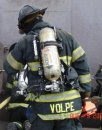
In the wee hours this morning my friend and brother, Tony Volpe passed away.  Tony was a Fire Service Warrior and I am proud to call him my brother.  Tony was felled by Cancer, a disease that is becoming all too common among firefighters.
Tony Volpe - Fire Service Warrior doing what he loved, teaching future firefighters.


Tony and I met at the Darien Woodridge Fire Protection District.  I was a part-time firefighter, and Tony a contract paramedic and part-time firefighter.  We would sit on the bay-floor from time to time and talk about the fire service and our love of the job.  Tony was a passionate firefighter and like all passionate people he could drive you crazy.  He was firm in his convictions and beliefs about the fire service.  I know we had days where we didn't see eye to eye, but at the same time we knew the other was dedicated and focused.

Time seperated us for awhile, as it does so often.  I moved onto my full-time position and Tony onto his.  We would run into each other occassionally at classes, but we had limited contact.

Then last fall we reconnected.  Tony was engaged to his lovely wife Melissa and they were waiting for her brother to return from an Iraq deployment as a Marine Officer.  We met at a fire department benefit on September 11th, and all Tony could talk about was how proud he was of his brother-in-law to be and how relieved the family was that he was going to return safely.

Shortly after that night Tony reached out to me.  He read about Heather's most recent Cancer occurrence and wanted me to know he was there to talk and listen.  When Heather was in the hospital Tony was off on a Duty-Injury, and we went out one evening to talk, and reconnect.  Several Guinness and Jameson later we had firmly reconnected our friendship.

Not to many weeks later Tony found out about his own Cancer diagnosis.  He was diagnosed with Colon Cancer.  It was aggressive.  Tony was able to marry his beloved Melissa on January 9th.  Melissa was a champion for her husband and was by his side through everything.

In the last few months Tony fought hard against difficult odds.  He endured Chemotherapy, and multiple surgeries.  He fought hard right up to the end.  I saw him just a few days ago and he was having a good day.  His eyes were clear and his energy was good.  We talked and I was able to leave him with the Introduction to my book, with the promise of talking about it the next time I saw him.  I guess I will have to wait to have that conversation....

I will always remember Tony and his passion for being a Firefighter, and an Instructor.  He also was a writer who wanted to pass his ideas on to the fire service.  He published an article in Fire Engineering in 2007.  Read it.  Rescue Through A Gable.

Godspeed, Brother! You will be missed but you will not be forgotten.  Say hi to Tony Lockhart for me, and I'll see you the next time we are in the same place.


Tuesday, May 11, 2010

Fire Behavior

Here's a good YouTube video for illustrating fire behavior principals.
We all know that in order for a fire to burn you must have fuel, heat, and oxygen.  Solids and liquids don't burn, only gases.  As the solids and liquids heat up they decompose and release combustible gases that will burn.  At the 12second mark of the video look at what happens to the smoke.


The smoke venting from the doorway starts to light up because it was too rich to burn until it got into the atmosphere.  It's way hot (look at the push behind it and how it is flowing straight up), and obviously from the dark color we know that it is chock full of unburned material.  All it needs is that breath. 

I'm not sure when this video started in relation to crews arriving, but it seems like their is some kind of water supply issue.  The stream is weak once it starts and the pipeman was standing there waiting to open up.  This is a situation where you might want to start a little further back from the door as well.  Just a few thoughts and some things to look for.

Stay Safe

Saturday, May 8, 2010

Bread and Butter Fire Attack

Pretty decent little fire attack.


Okay, this really is a bread and butter fire attack for every fire department in the country.  One story, frame, occupied, probably 25' by 30'.  The front room is involved, but the smoke doesn't look ugly from what you can see on the video.  The nozzleman does a reasonable job of leading out, and the fire is knocked quickly.  I like the entry through the front door.  It's faster than trying to get around to the rear (did you see the fence?) and also makes sure your Engine is doing a primary of the likely escape route if there was someone inside.

They get up and open the roof fairly quickly.  To my way of thinking that is a two person roof job but I know some departments prefer to send a larger crew.  All in all a nice little video of what happens when we get water on the fire.

Think about what you would do if things were different.
Mental Rehearsal number 1: Let's say you pull up as the first Engine.  You are the experienced nozzleman  and your officer is a bit of a worrier.  As you step off the rig and take a look you go to stretch and the officer says, "Hit it from the window first."  Does that sound like a good idea?  Is this a fire that needs a defensive to offensive mode of operation to make it safe?  No.  Be ready to step up and say, "If we put the line in the window we are going to push fire into the house. We can get this one boss."

Mental Rehearsal number 2:  What would you do as the Truck if you were first on scene and there was someone standing on the front lawn saying, "The baby is in the back room!"  Are you waiting for the Engine?  Obviously not waiting for water will put you in a situation that could become untenable quickly.  Waiting for water could mean the kid dies.  I think this is one of those situations where you do some RECON and see if you can make the grab.  You have 600 square feet tops here.  Based on the smoke the door to the fireroom may be closed.  If not, you may be able to scurry down the hall with a can and get control of the door.  Even a hollow-core door will buy you a few minutes to do a primary back towards the front of the house.

My only "do better" on this video is that I hate to see people getting off the rig with their SCBA Facepiece on.  I know MSA has the ability to let you breathe ambient air,  but the mask limits your peripherial vision and makes it much harder to take in the big picture.  Look at the guy running up to the door with the axe.  Running on the fireground should only be away from the building, otherwise you are moving forward faster than you can visually process.  Take the second to don your mask prior to making entry, that way you can slow down and "pull your boots up" the way generations of folks did.  It gives you that second to get a sense of the whole scene and prepare for the job.

Again, just my two cents.  Cheers!

Thursday, May 6, 2010

Training Video Time, Kids!

Watch what happens at roughly the :45sec mark.


This is why we don't vent behind the Engine!  By the 1:18 mark you can see that there was an Engine Company inside making what was probably a very difficult push to the seat of the fire.  Even with the failed window in the fire room there was still a tremendous amount of heat in the front.  Read the smoke!  It's pushing out under pressure from the front of the building.  This is one of those times we have to open the roof!

Most departments out there are operating at a deficit when it comes to responding manpower.  There aren't enough people to go around.  Regardless we have to figure out a deployment that allows us to open the building up properly.  You'll see once they are outside and choose a defensive attack (any attack made from outside the building is defensive) it takes roughly :10sec of water to get a knock on the fire room that was causing the problem.

Once one interior room has flashed over the rate of heat transfer to the rest of the house skyrockets.  Think of it like your oven.  Until the thing heats up you can set potatoes in there bare handed all day long.  Once it is 400 degrees though it gets warm just standing in front of the open door.  The interior of the fire building is the same way, just that room that flashed is radiating 1500 degrees or more into the rest of the house.

Back to the embed video.  About the 4:00 mark you see two guys head to the roof and then hear the saw running.  We can see that the D side still has a well seated fire.  At 5:02 we see a member venting the front gable window of the 1/2 story (which is probably occupied living space).  There is probably the same window in the rear.  These windows aren't the best for "vertical" ventilation, but they do pop the cap and start to relieve some of the pressure.  They may be better than not having any kind of top side opening.  The primary concern has to be not dragging the fire into unburned areas where victims may still be.  However given the level of fire development there is little chance that without venting those windows anyone on the second floor would live long.  We have to control the environment!

As you continue to watch the video there are some questionable choices made.  Why?  Lack of Situational Awareness!  Do we perceive, comprehend and predict what is going on? This is one of those videos to sit down and have a shift drill with.  Talk about what is going on and then how you would handle the fire if it was in your town.

As always it is easy to Monday morning quarterback someone's fire and pick out things that could have gone differently.  However only by looking at these things do we have the opportunity to learn from the experiences of others.  How many fires have you been to this month, or even this year?  These videos, and hopefully my blog, are the mental rehearsal opportunities I keep talking about.  Make the most of every fire you can watch and review.  It's no different that a professional athlete watching game video!  Make the most of every fire you see.

Just some thoughts and a good video. Cheers and be safe.